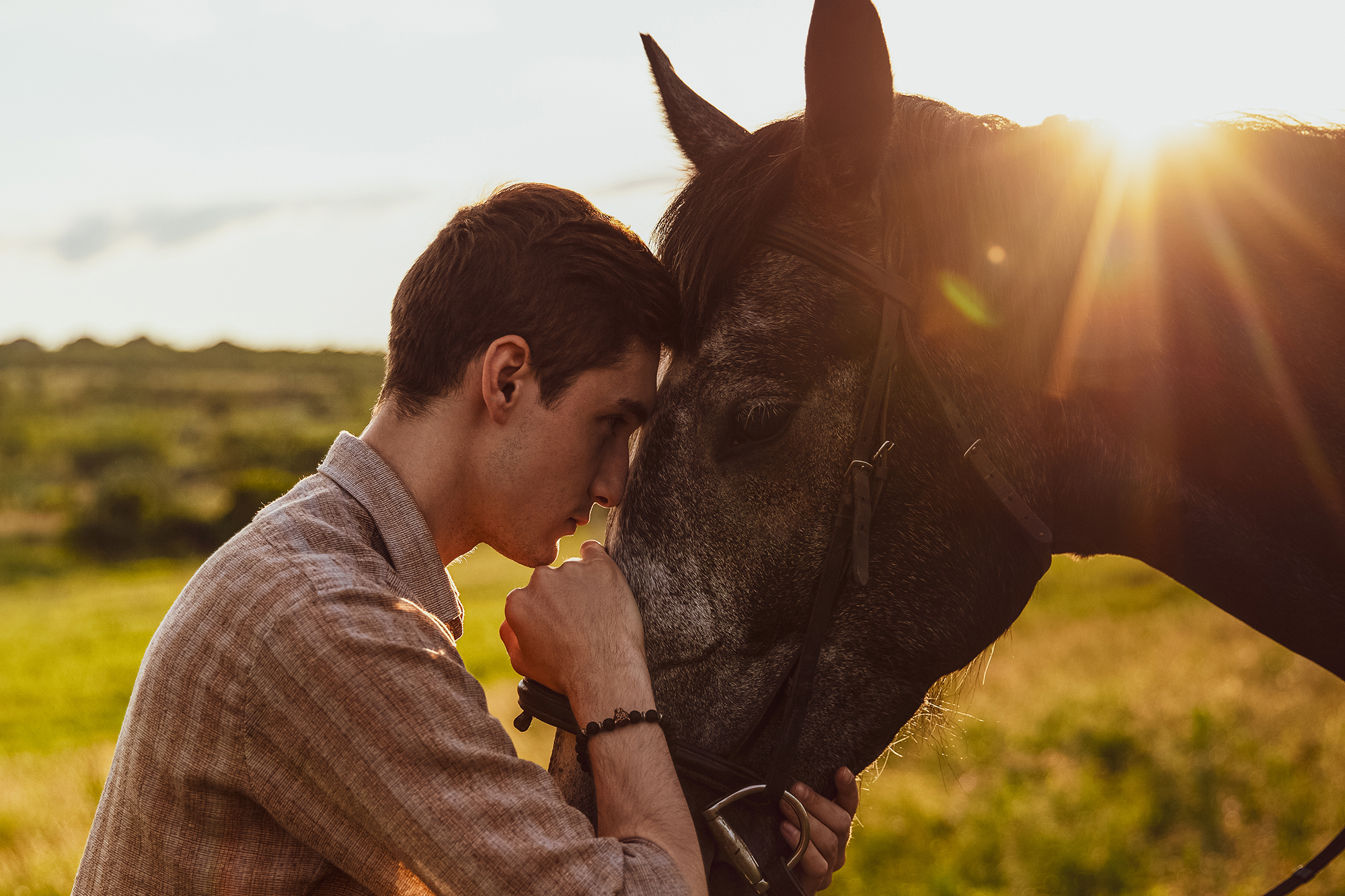
Equine assisted therapy is being used successfully in patients with different psychic and motor pathologies. In the present work, different physiological and behavioral parameters have been evaluated in horses and patients with psychomotor alterations during equine assisted therapy sessions. After a first anticipatory phase in which signs of stress were observed in the behavior of the horses, with increased heart and respiratory rates as well as increased blood pressure, the horses relaxed in the phase of interaction with the patients on the ground. Later, in the phase of interaction with the patient on horseback, physical activity increased the heart and respiratory rates in the horses, but these parameters decreased after finishing the sessions (recovery phase). The patients also showed some anticipatory stress with increased heart rate in the first phase, but they relaxed during the interaction phases on the ground and on horseback. In addition, the quality of sleep improved on the days of therapy. On the other hand, the patients improved their fine and gross motor function, as well as the parameters related to the cognitive, emotional and affective-social areas. The benefits in the patients had a positive influence on the quality of life of their families.
Abstract
Different welfare indicators were studied in three patients with psychomotor alterations and in two horses throughout 9–10 equine assisted therapy sessions in each patient. In horses, heart and respiratory rates, blood pressure, temperature and behavioral signs were studied. In patients, heart rate, oxygen saturation, temperature, sleep quality, psychomotor and emotional parameters were analyzed. Data collection was recorded in the anticipatory phase (15 min before the start of the session), two interaction phases (after 30 min of horse-patient interaction on the ground and on horseback, respectively) and the recovery phase (15 min after the end of the session). During the anticipatory phase, most of physiological parameters of patients and horses and the stress behavioral signs of horses increased, followed by a relaxing phase during the horse-patient interaction on the ground. In horse-patient riding phase the heart and respiratory rates of the horses again increased. These results showed that the horses did not seem to suffer stress attributable to the therapy sessions, but only an increase in their parameters associated with activity and external stimuli. The patients improved their gross and fine motor skills, their cognitive and perceptual-sensitive parameters and it led to an improvement in the life quality of their families.
Keywords: equine assisted therapy, horse-patient interaction, stress, well-being, quality of life
1. Introduction
So far the studies carried out on Animal Assisted Interventions (AAI) have been mainly focused on the well-being of the patients. In general, these studies show a positive effect of equine assisted therapy in patients with cerebral palsy and other psychomotor disorders, with an improvement in global motor development [1,2,3,4,5,6,7]. Thus, studies carried out on equine assisted therapy show an improvement in balance, range of movements, postural control, functionality and motor control [4,6,8,9,10]; as well as an improvement in cognitive, sensory and emotional capacities [3,5]. Some authors [11] determined that the functional improvements obtained in children with infantile cerebral palsy were, essentially, due to the movements the horse transmitted to the rider’s body, these impulses being three-dimensional, rhythmic and equivalent to the physiological pattern of human walking. According to the published scientific literature, the benefits of the equine assisted therapy are many and no negative effects have been observed in patients who have been treated with these therapies. However, it is not possible to generalize the results that have been published so far, due to many factors such as small sample sizes, heterogeneity in terms of age or clinical manifestations [4]. On the other hand, the International Association of Human Animal Interaction Organizations IAHAIO establishes a series of guidelines that must be taken into account in AAI to avoid harm to people and therapy animals (co-therapist). Thus, patients should not suffer any specific allergy to the breed or species of animal used during the session and an exclusion criterion should be implemented for “high risk” cases (immunosuppressed patients or patients with diseases transmitted through animals). In addition, equine assisted therapy is contraindicated in cases where the patient should not be mobilized and where inflammatory processes are present. Regarding animal welfare, according to IAHAIO guidelines, the AAI sessions should only be carried out with the help of animals that are in full health, both physically and emotionally, and that enjoy this type of activity. It is imperative that the animal handler is familiar with the participating animal in the intervention. It is the responsibility of professionals to ensure the welfare of the therapy animals and to consider the well-being and safety of all participants. Professionals must understand that the participating animal, regardless of the species, is not simply a tool, but living being.
Currently there is a growing number of works aimed at studying the welfare of the therapy animal that include, among others, studies on physiological, behavioral and hormonal parameters. Previous authors [12] studied the behavior of horses in therapeutic riding programs. No significant differences in stress-related behaviors were found by these authors when horses were ridden by recreational riders, physically and psychologically handicapped riders or special education children. However, the mean number of stress-related behaviors was significantly higher when horses were ridden by the at-risk children (children of low socioeconomic status, poor school performance or disciplinary action). According to these results, the authors suggested that for horses in a therapeutic riding program, being ridden by physically or psychologically handicapped individuals is no more stressful for the horses than is being ridden in the same setting by recreational riders. However, since that at-risk children caused more stress to the horses, the authors suggested that the time horses are ridden by at-risk children should be limited both daily and weekly. On the other hand, an ethogram was developed in the cited study [12], that included specific equine behaviors that indicated stress, irritation, or frustration on the basis of results of previous studies [13,14,15,16] and the experience of the investigators. The ethogram developed in the cited study is currently used as a valid reference in stress studies of horses used in assisted therapy. For this reason, this ethogram has also been used in the present work (see Section 2).
Likewise, other authors [17] compared the level of salivary cortisol in horses that were used in therapeutic riding with the cortisol released by the same horses in non-therapeutic riding sessions. Additionally, the horses of that study were scored for different stress behaviors based on the ethogram developed by the authors previously cited [12]. Salivary cortisol concentrations were not higher in horses during therapeutic riding, compared to hunt seat riding or rest conditions. Similarly, behavioral evaluations of the horses during these different activities did not reveal differences in stress levels. According to these findings, the authors suggested that therapeutic horseback riding did not induce more stress than hunt seat riding for the horses involved.

0 Comments